Degree Show 2026
Maintain and Nurture
Artist Statement
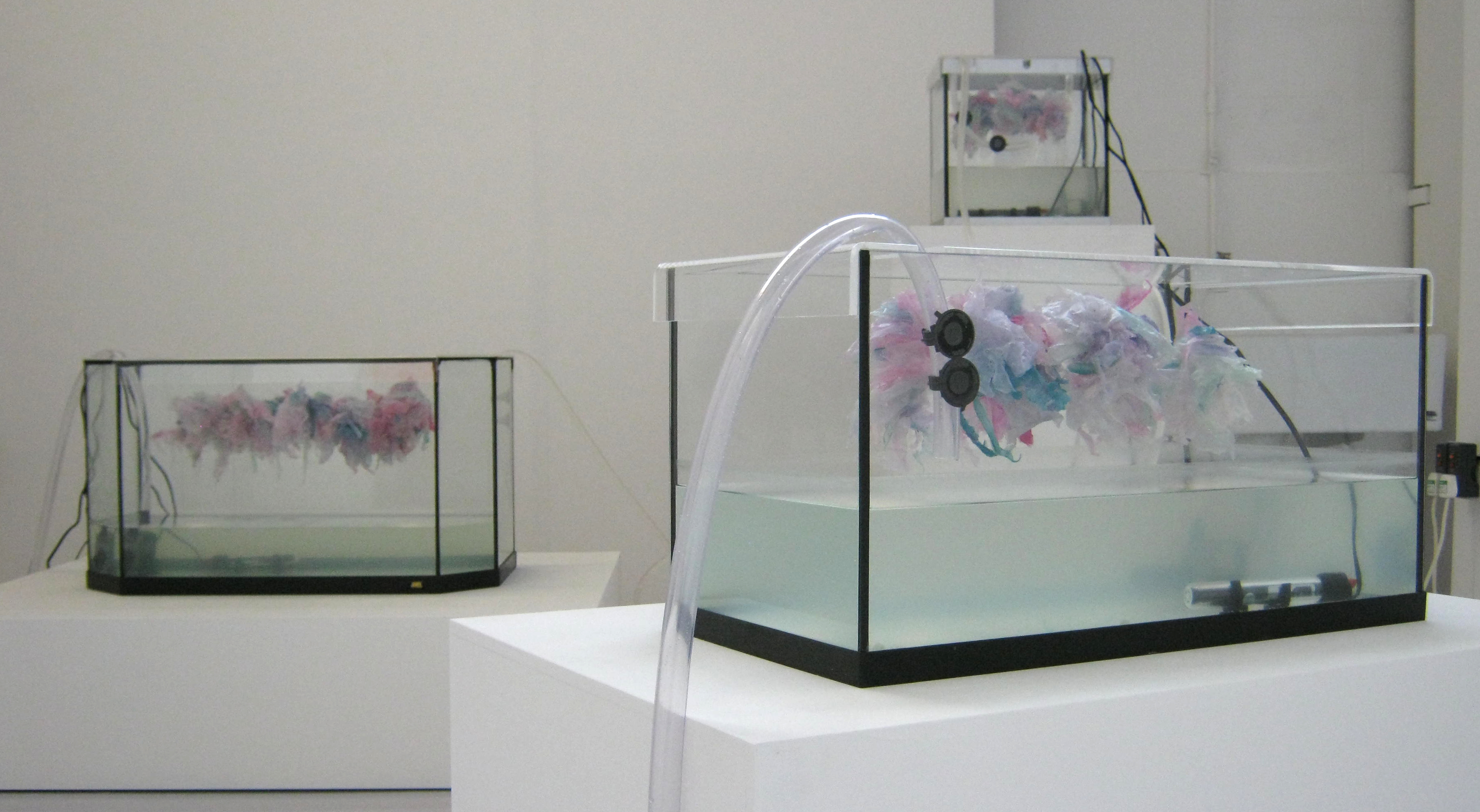
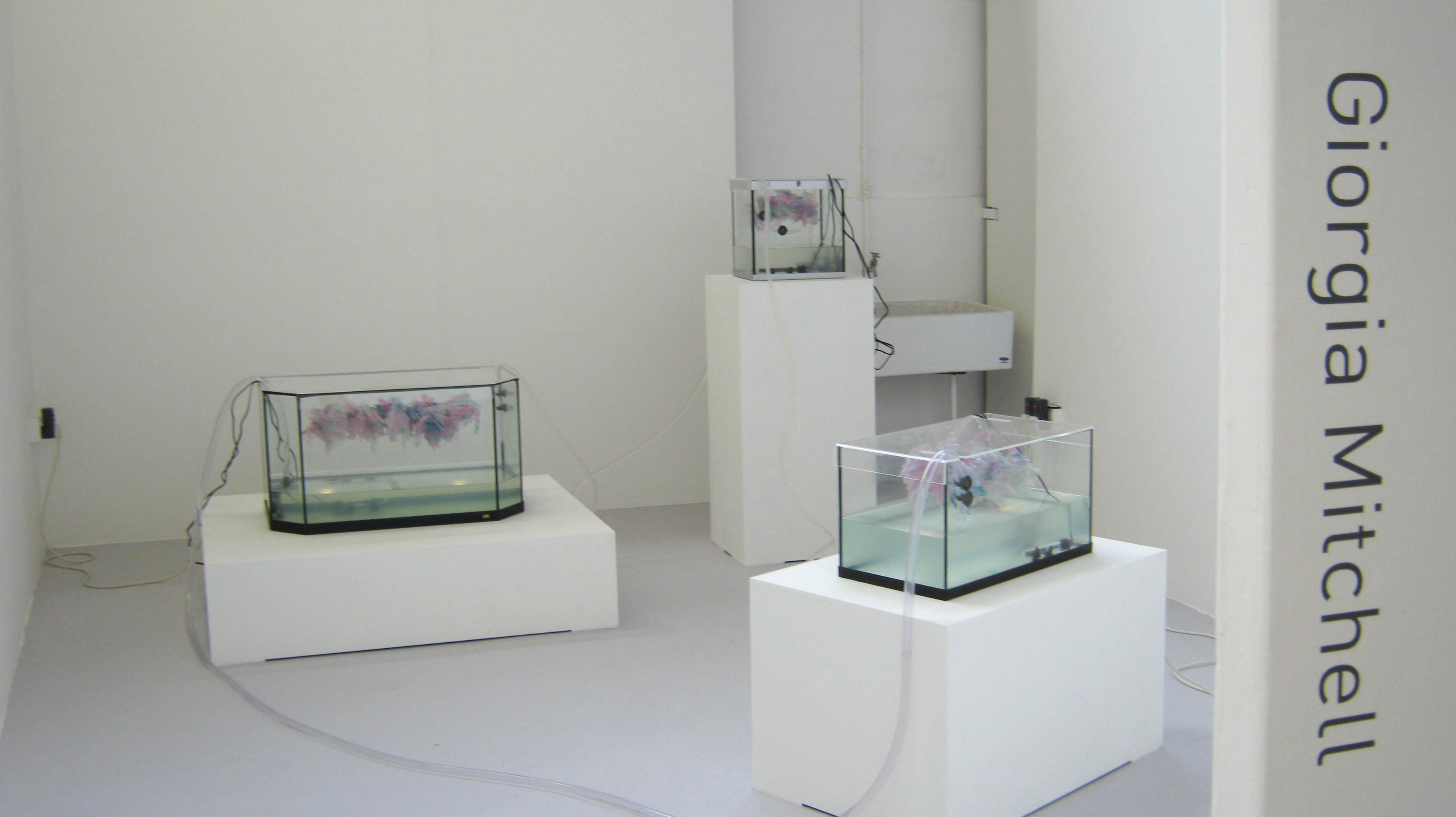
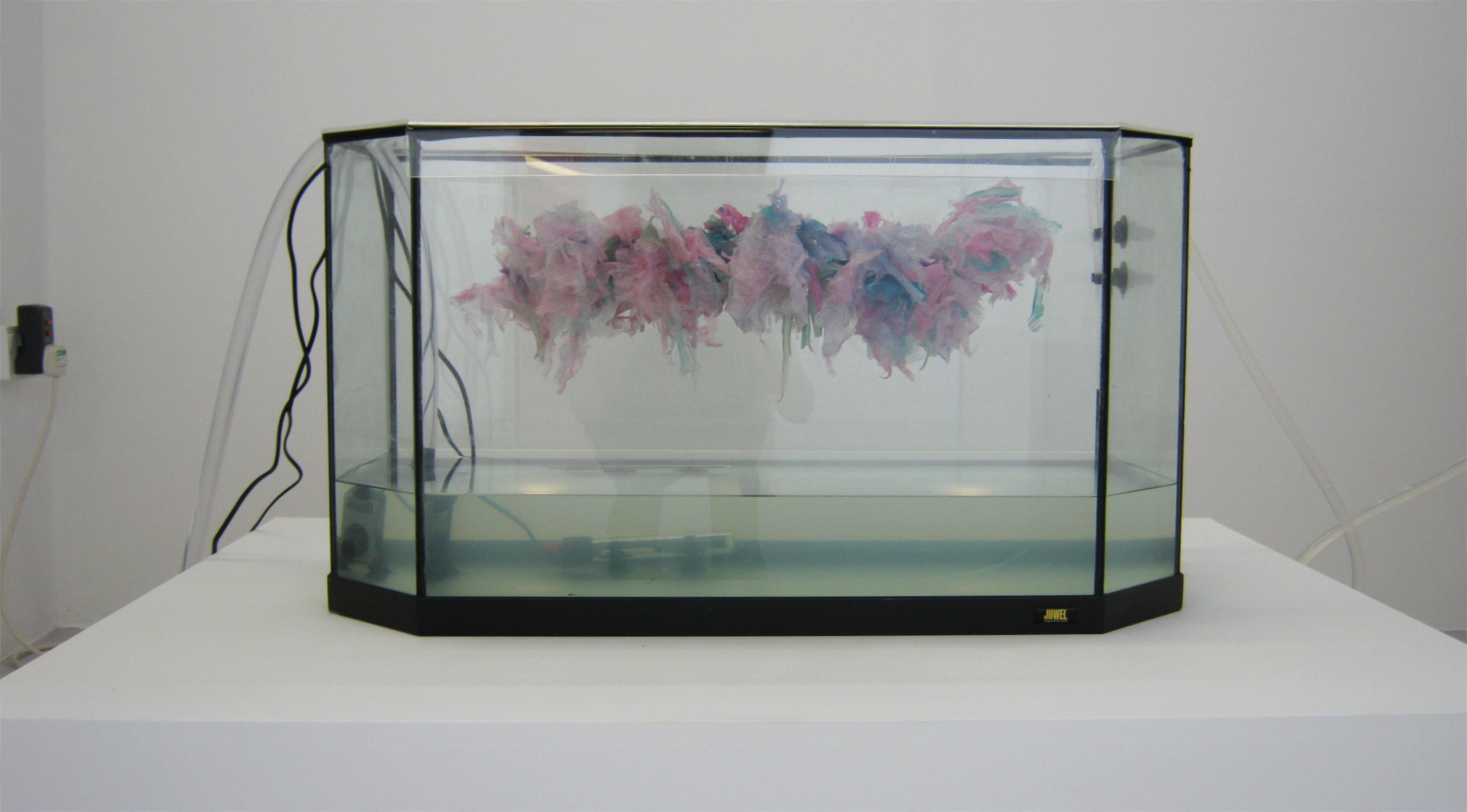
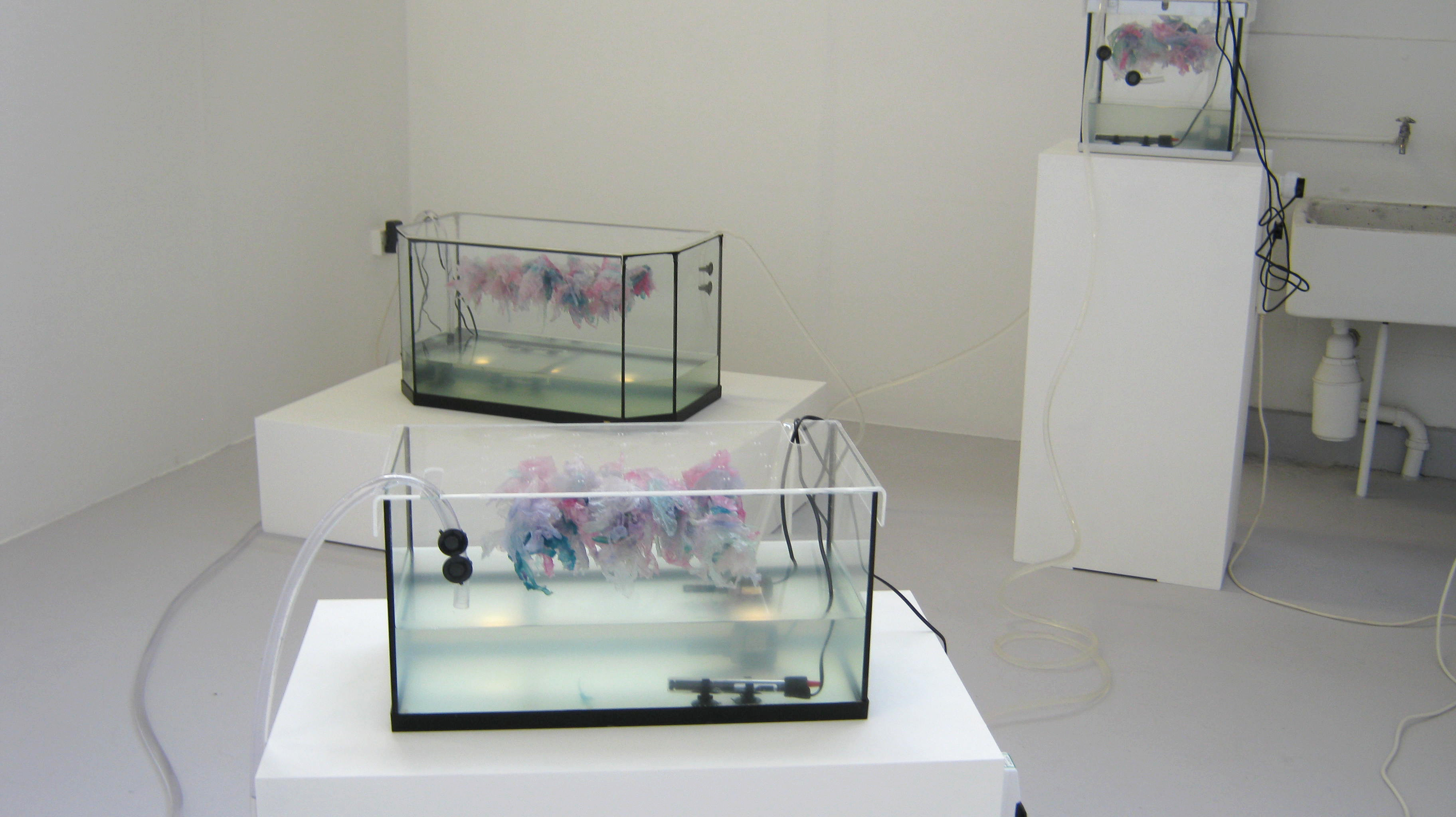
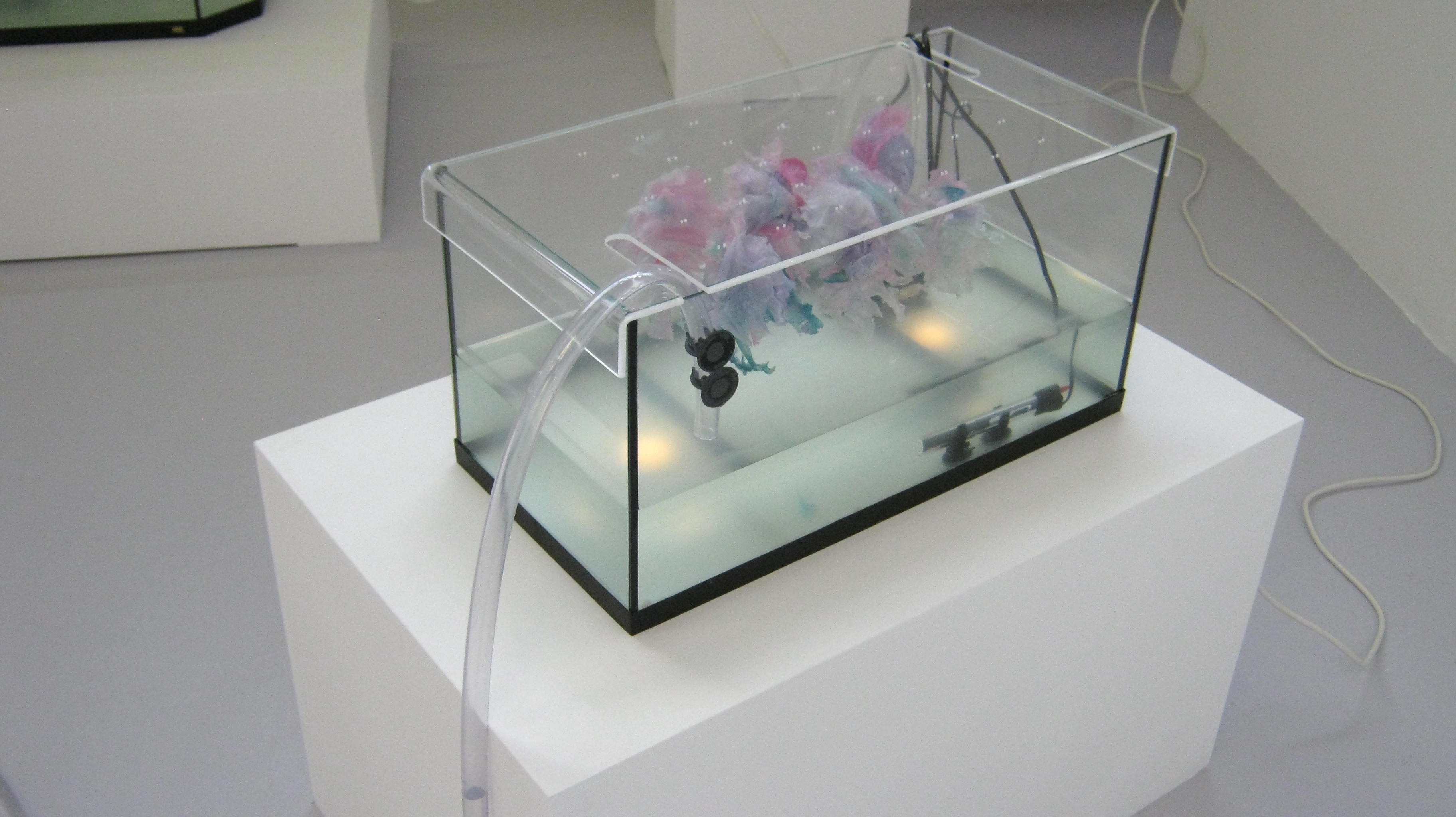
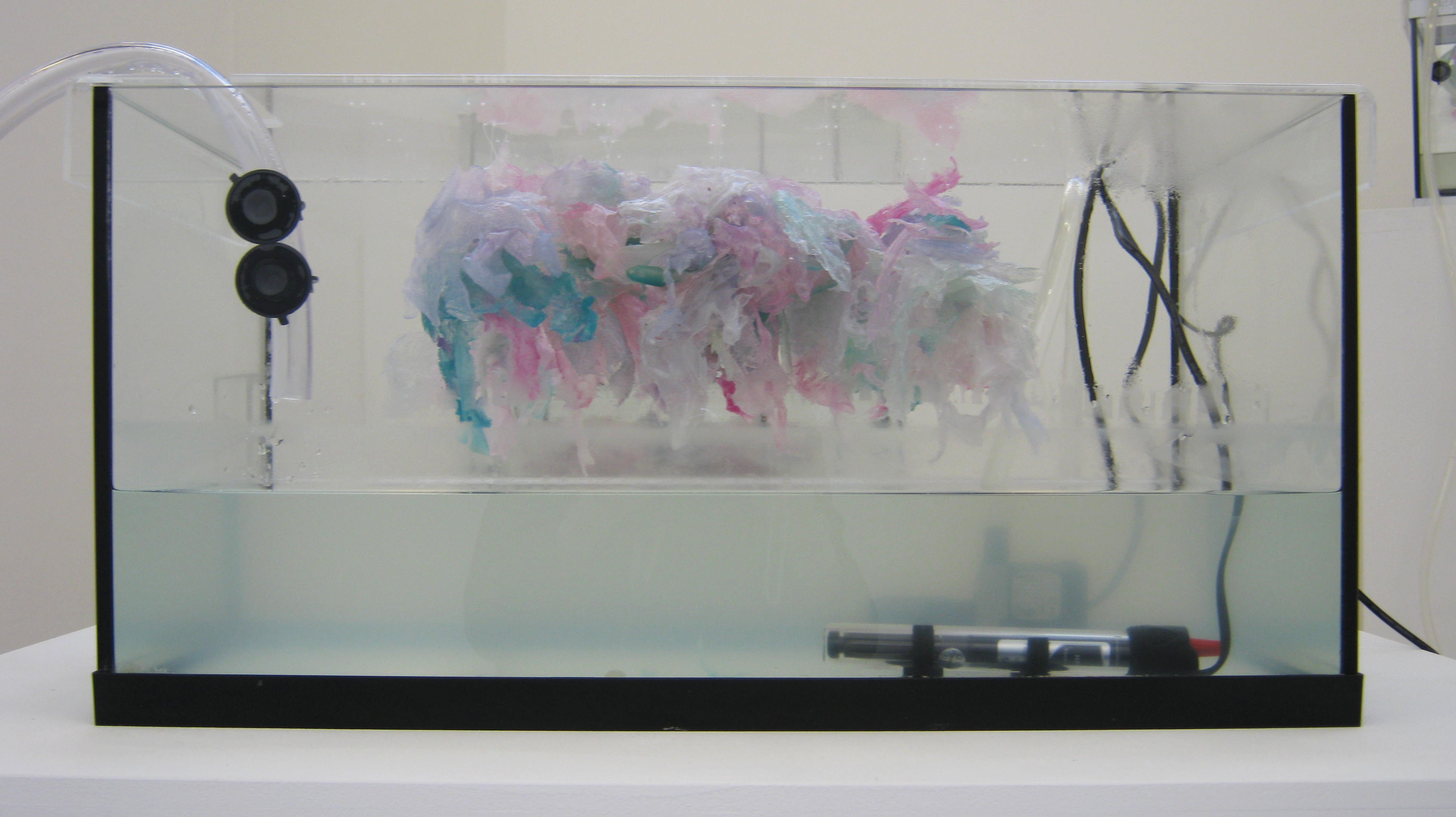
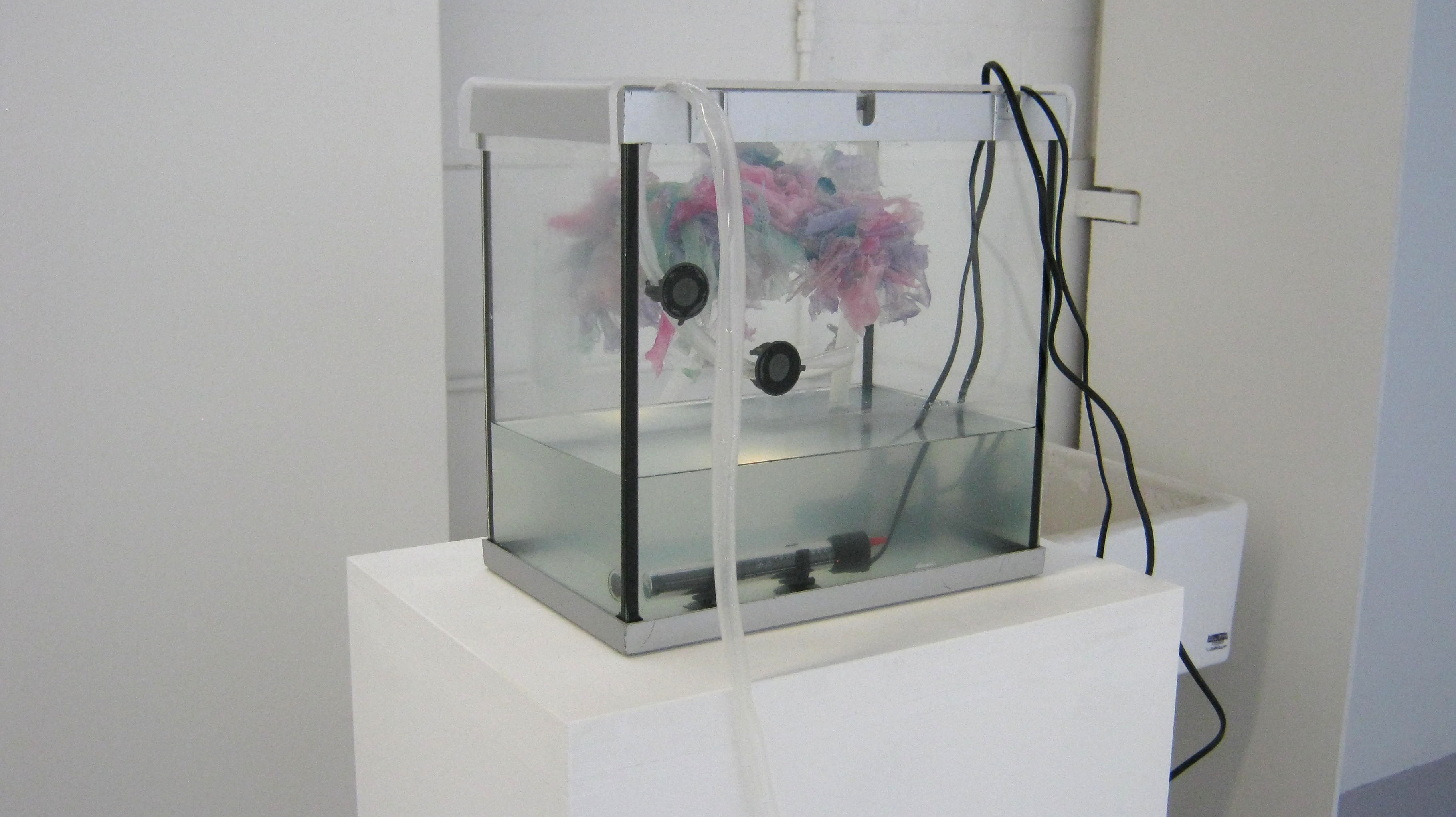
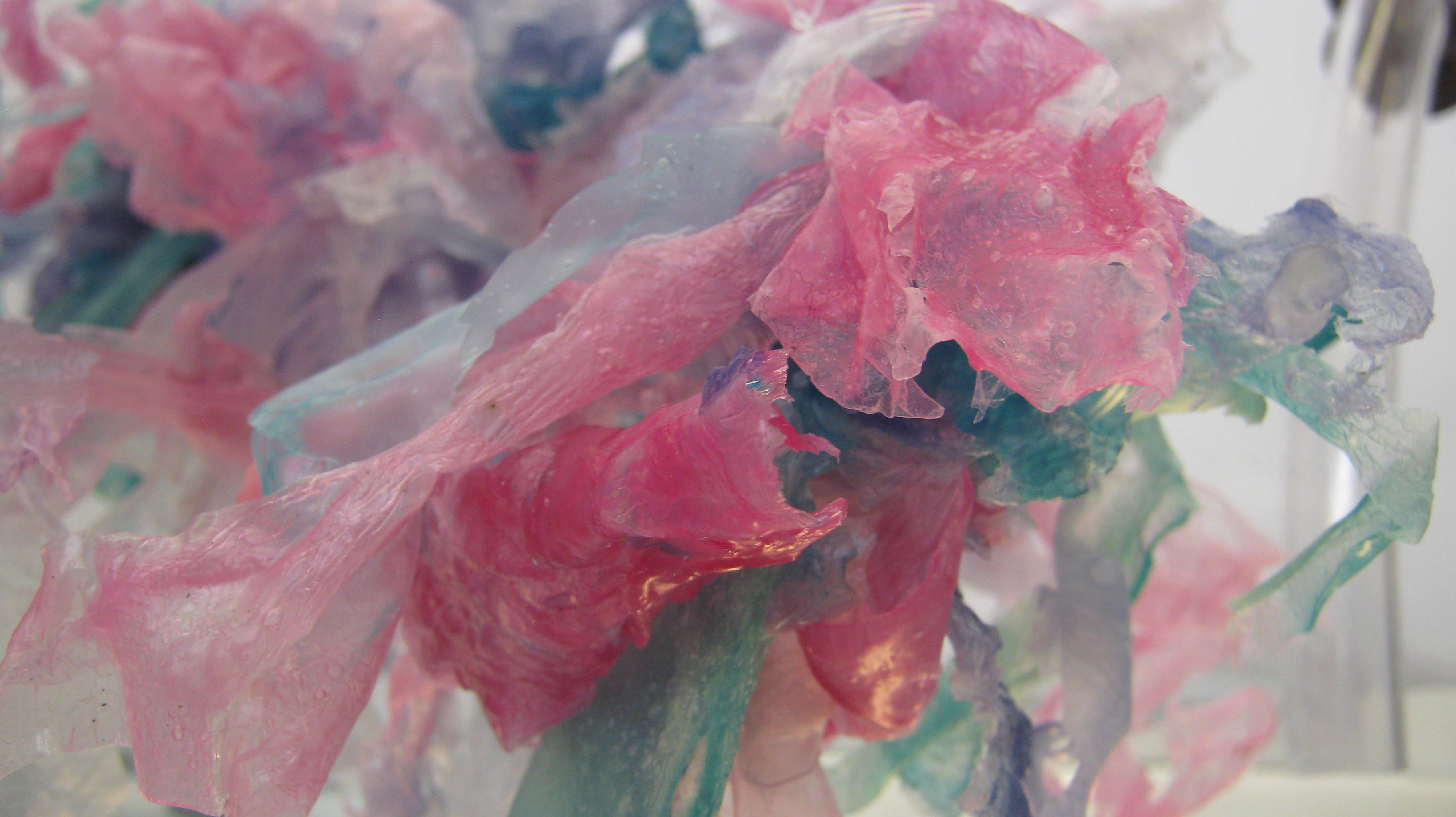
Operating within a new-materialist ontology, my practice consolidates sculptural media, found objects and displaced technologies to generate lively outcomes. In my exhibition piece, Maintain and Nurture, I render the concept of ‘agential matter ‘as tangible – visually communicating the process of ‘intra-action’through thermochromic, bioplastic structures (Barad, 2007). Housed within aquariums, a network of pumps, heaters and tubing accompany the ephemeral forms, tasked with sustaining them within their enclosures whilst suspended above bodies of water.
The Bioart movement plays a significant role in my creative methodology. Informed by bio-artists Gilberto Esparza and Hans Haacke, I chose to relinquish a level of control to the non-human operatives within my work (Jones and Bell, 2022). Colour changes, structural variations and emitted odours collaborate to produce spontaneous visual outcomes – demonstrating the creature-like qualities of the bioplastic composite.
Through the material’s receptive properties, I address Karen Barad’s ‘agential matter’ and Donna J Haraway’s writings on ‘Sympoiesis’ to prompt a reconsideration of artistic objects as agential forces, critiquing the authority an artist holds to displace non-human matter (Barad, 2007; Haraway,2016). Within the narrative of my installation, the aquariums are instruments of the Anthropocene, recontextualising their contents as aesthetic assets – as seen in Pierre Huyghe’s Zoodram (2010-2011) series (Burnes, 2024). Unable to intra-act beyond their casings, the balance of agency is disrupted, and my fabrications grow reliant of me as their caretaker, likening them to captive organisms.
Drawing upon Esparza’s curation of Plantas Autofotosintéticas (2013-2016) my work resides within a quasi-scientific narrative, where the technologies employed to nourish the bioplastic material are on full display: composed of trailing extension cables, wires and tubing that undulate between the varying heights of the tanks. Whilst the machine in Plantas Autofotosintéticas (2013-2016) has a mutually beneficial relationship with the organic life at its core, Maintain and Nurture is a parody of such (Esparza, 2016). The devices intended to ‘maintain’ the bioplastic composite do little to that effect, instead providing the illusion of security – performing their menial tasks to the audience’s satisfaction. As such, the imperatives ‘maintain’ and ‘nurture’ are satirical, with the structures undergoing a slow decomposition over the progression of the exhibition.
As the foundation of the system, water is both the stimulant for thermochromic action and the cause of degradation for the bioplastic fabrications – a cultivator of life and death. Through a hydro-feminist lens, our shared status as bodies of water, whether as human bodies or artistic mechanism, aids to surpass the separation between artist, audience and artwork (Neimanis, 2012). By consequence of anthropogenic activity, human infested waters circulate through the installation, allowing for traces of plastic, medication and other pollutants to intra-act with the material: which completes the exchange by dissolving into the liquid itself (Neimanis, 2012). This subtle display of intra-action bypasses the boundary of the vitrine, exemplifying that the forces of agency are not ours to govern (Haraway, 2016).
Bibliography
Barad, K. (2007) Meeting the universe halfway: Quantum physics and the entanglement of matter and meaning. Duke University Press
Burnes, S. (2024) Inside the dark vision of Pierre Huyghe. Available at: https://www.frieze.com/article/pierre-huyghe-liminal-2024-review (Accessed: 13 May 2026)
Esparza, G. (2016) Plantas autofotosintéticas / autophotosynthetic plants. Available at: https://gilbertoesparza.net/portfolio/plantas-autofotosinteticasautophotosynthetic-plants/ (Accessed: 13 May 2026)
Haraway, D. (2016) Staying with the trouble: Making kin in the Chthulucene. Duke University Press.
Jones, C. A., Bell, N. (2022) Symbionts: Contemporary artists and the biosphere. MIT Press
Neimanis, A. (2012) ‘Hydrofeminism: Or, on becoming a body of water’, in Gunkel, H., Nigianni, C. and Söderbäck, F. (eds.), Undutiful daughters: Mobilizing future concepts, bodies and subjectivities in feminist thought and practice. (Online edn). Palgrave Macmillan. Available at: https://www.are.na/block/14367311